NoCode Society Builder Lab

Build your first managed AI agent in 4 weeks.

A small-group build lab for owner-led service operators. Bring one messy workflow, learn how to turn it into an AI operator, and leave with something real.

Why now

AI is moving from chat experiments into deployed business systems. Builder Lab teaches the small-business version: one useful operator, clear rules, human review.

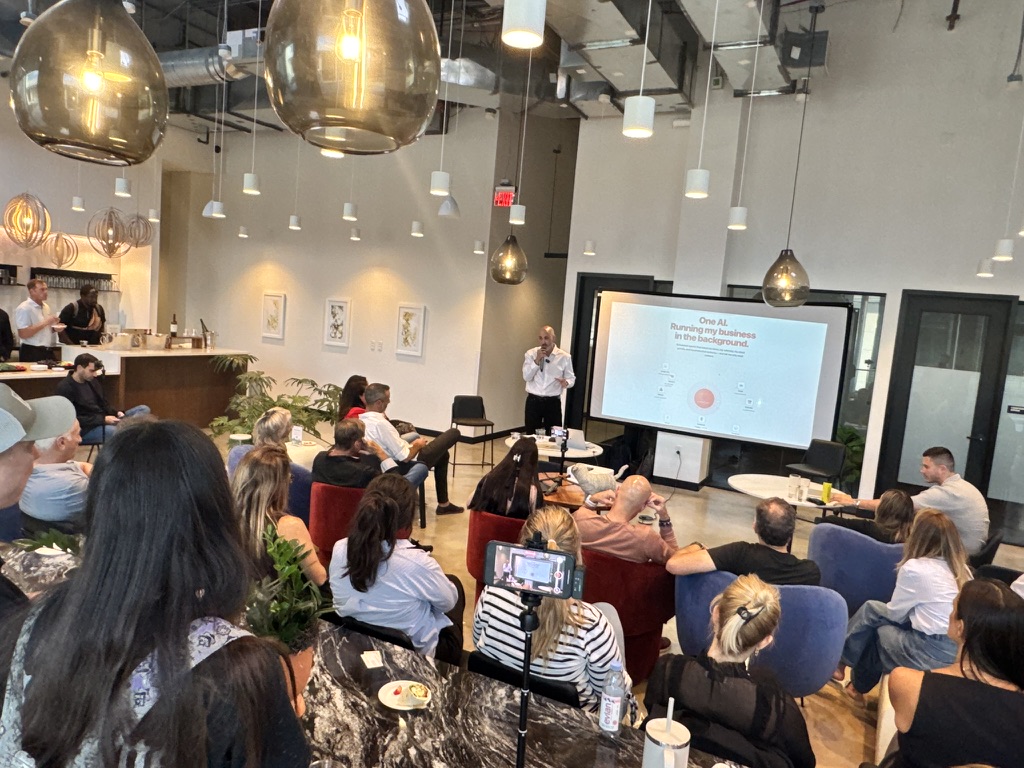
Antonio speaking on stage during a live build lab
Live build lab, small cohort.
4 weeksA focused build path.
One AI operatorBuilt around real work.
Small cohortClose review with Antonio.
Human judgmentUnderstanding stays with you.
Prompting vs deployment

A blank chat waits for instructions. A managed AI agent has a job.

A blank chat makes you brief the work from scratch every time. A managed AI agent is a trained operator with context, a checklist, access to the right source material, and rules for when to ask you.

Blank chat
Can you write this follow-up?
Sure. What meeting was this from, who is receiving it, what tone should I use, and what is the next step?
Paste notes, explain rules, check output, repeat.
Managed AI agent
Knows the jobUses your workflow, examples, and review rules.
Prepares the workTurns notes into a draft, brief, plan, or task list.
Stops for reviewNothing important leaves without approval.
Ready for human review
How it fits together

NoCode Society is the home. Builder Lab is where operators get built.

NoCode Society gives you the broader learning home. Builder Lab is the working room where Antonio helps you turn one real workflow into a managed AI agent you can actually use.

NoCode SocietyThe broader home for people learning to think in AI operators and build useful business workflows.
Builder LabThe working room where one recurring task becomes a managed AI agent with rules, source material, and review.
Cohort 01The first 4-week guided path with a small founding group and a clear application gate.
Plain English

Here is what I mean by AI operator.

A managed AI agent is an operator for one recurring workflow. It knows the context, follows your rules, prepares the work, and waits for your review before anything important happens. The goal is not to stop thinking. The goal is to stop repeating work you already understand.

Useful help without blind automation.
One deployed workflow, not a pile of random tips.
Human approval stays built into the loop.
01

Context

The background it needs to understand the work.

02

Examples and rules

The standards, boundaries, and review points.

03

Tools and actions

The files, notes, drafts, and task systems it can prepare.

04

Review

The human checkpoint before anything risky leaves your desk.

05

Delivery

The right draft, brief, plan, or task in the right place.

06

Memory

The notes that make next week easier than this week.

Field work

This started as field work, not a course outline.

The workshop came first. I taught the operator model, watched where people got stuck, and turned the useful parts into the Cohort 01 build path.

The method comes from live operator work: define the job, give it context, set review rules, and make the workflow normal enough to use next week.

Antonio presenting a managed AI agent workflow to a business audience
The room
Antonio speaking beside a slide about one AI running business work in the background
The model
A screen view of Antonio teaching a managed AI agent model
The walkthrough
Your first build

Bring one piece of repeat work worth turning into an operator.

Bring the work you already know too well. We will choose one place where better drafts, prep, triage, or planning would save time without giving up control. These are examples we study and adapt during Cohort 01.

Illustration of a morning brief workflow

Morning brief

A daily readout that spots open loops, pulls context, and tells you what needs attention first.

Illustration of an intake workflow

Intake agent

A path that gathers missing details, sorts requests, and knows when to hand work back to a person.

Illustration of a follow-up workflow

Follow-up sequence

A system that remembers who owes what, drafts the next note, and keeps a clean record.

Real systems proof

The examples come from operators already doing work.

Cohort 01 uses working examples as source material: dispatches, skills, alerts, intake paths, follow-up drafts, client operations, and human review loops. You learn the deployment pattern, not a single tool trick.

Dispatch workflowA command center pattern for surfacing open loops, next actions, and blockers.
Morning briefA daily view that starts with memory instead of a blank chat box.
Intake and triageA repeatable path for collecting context, asking for missing details, and routing work.
Follow-up loopDrafts, reminders, task notes, and review points that keep work moving.
Screenshot of an AI operations workflow
Before anything leaves your desk

You review the work first.

The agent can prepare a draft, brief, plan, or task list. You decide what is good enough to send, share, or save.

Draft, review, approve, then send.
Examples and notes improve the next pass.
Risky work waits until a human signs off.
The 4-week path

We deploy it together, one layer at a time.

I do not teach this as a pile of tricks. Each week adds one practical layer, and you keep applying it to the same piece of work until the operator is usable.

W1

Choose the work

Map the recurring task, define success, and write the first useful agent brief.

You leave with: work map
W2

Train judgment

Add context, examples, rules, and review points so the agent drafts closer to your standard.

You leave with: training set
W3

Build the loop

Shape the trigger, inputs, draft, review step, delivery point, and memory notes.

You leave with: working loop
W4

Make it normal

Test the agent against real work, tighten the checklist, and plan the next useful version.

You leave with: agent routine
Four live workshops
Replays and workbook
AI Operator Starter Kit
3 months inside NoCode Society Lab
Working Agent Guarantee

Leave with the operator, or I help you finish it.

Show up and complete the weekly build tasks. By the end of 4 weeks, you will have one managed AI agent helping with a real recurring workflow. If it is not working, I will help you finish it personally or refund you.

Fit

Who I want in the room.

Good fit

  • Consultants and agency owners with repeatable client work.
  • Service firm owners who want cleaner ops without hiring a dev team.
  • Solo founders who need help with meetings, follow-ups, research, and planning.
  • Future AI service providers who want a real operator model first.

Not a fit

  • People looking for passive income promises.
  • People who want AI to think for them or run client work without review.
  • People who only want a list of tools.
  • People unwilling to build one actual workflow.
FAQ

Common questions.

Do I need to code?No. Builder Lab is built for business owners, consultants, and operators. You will learn how to design the workflow, give AI useful context, set rules, and review the work.
Which tools do we use?We use common AI tools and the files, notes, calendar, email drafts, and task systems you already use. Tool names may change. The core skill is operator design: knowing what the agent needs, where judgment belongs, and how to review the output.
Is this for beginners?Yes, if you are willing to build one actual workflow. You do not need a technical background. You do need a recurring task worth turning into an operator.
Will this work for my industry?If your work includes meetings, follow-ups, research, planning, proposals, content, or client updates, the method can fit. The first managed AI agent is shaped around your workflow.
How much time does it take?Plan for one live workshop each week plus build time. The goal is steady progress on one useful managed AI agent, not a giant rebuild of your business.
What happens after 4 weeks?Builder Lab members get three months inside NoCode Society Lab with replays, recipes, prompt examples, and help improving their managed AI agent.
What does the guarantee cover?Show up, complete the weekly build tasks, and by the end of 4 weeks you will have one managed AI agent helping with a real recurring workflow. If not, Antonio will help you build it personally or refund you.
Founding cohort

Apply for Cohort 01

I review applications first so the room stays small and focused. Tell me the recurring workflow you want to turn into an operator, and I will send the next step if it is a fit.

The application is short on purpose. I am looking for people ready to build one real AI operator in a small, practical room.